Indoor vs. Outdoor Hot Tubs: Placement Guide for Kentucky Homes
One of the first decisions you have to make is where the spa actually goes. Indoor or outdoor?
Most people think this is a simple choice. It's not. Both have real advantages and real drawbacks. And the wrong choice can cost you in comfort, in installation, and in how much you actually use the thing.
I've been installing hot tubs in Lexington for 50 years. I've put American Whirlpools and Vita Spas in basements, garages, sunrooms, backyards, patios, decks. I can tell you exactly what works and what doesn't.
Outdoor: The Most Common Choice in Kentucky
Most of our customers put their spa outside. There's a reason for that.
An outdoor spa is easy to install. You need a level pad, either concrete or a reinforced base. You need electrical access nearby, usually a 110-volt circuit or a 220-volt line depending on the model. You run a drain if you want it, but it's not critical since the water's already outside. Done.
An American Whirlpool or Vita Spa with good insulation heats up to temperature in about 20 to 30 minutes. Once you're using it in Kentucky weather, you barely notice the outdoor temperature. The water's 102 degrees. The jets are massaging your back. The cold air on your face is actually refreshing.
You step out of the spa in January and the cool air hits you and wakes you up. Some people love that. After spending 30 minutes in 102-degree water, it's invigorating.
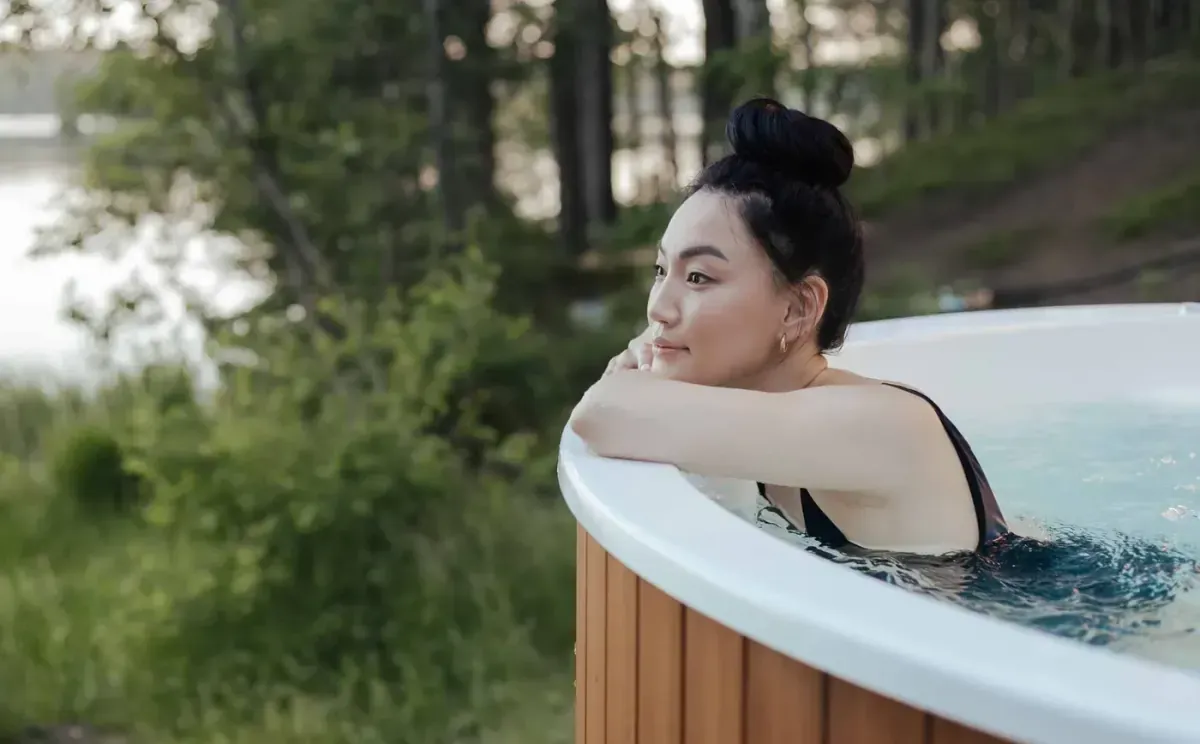
You're looking out at your backyard. If it's dark, you see the stars. The LED lighting around the spa looks nice. There's something about an outdoor spa that feels like you've created a little resort in your own yard.
Outdoor Requirements
The pad has to be level. Not sloped. Level. A spa sitting on an uneven surface puts stress on the shell. Water pools in one corner. The jets don't hit right. The pump can actually cavitate if the water level isn't balanced. This is important. Don't cheap out on the base.
Electrical needs to be accessible. Your spa is either 110 volt or 220 volt. If it's 220, you need proper wiring. It's not a DIY job. You need a licensed electrician. We can recommend one. They'll run the circuit, install a disconnect, make sure it's code. It costs about $500 to $1,000 depending on distance.
You want good drainage. Most people don't drain their spas often. But when you do, where's the water going? Some people run a small drain line to a french drain or a low spot in their yard. Some just let it flow across the yard, which is fine in Kentucky where we get enough rain that it drains naturally. Just don't drain it right next to your foundation.
Privacy is nice. An outdoor spa in the middle of your backyard means your neighbors can see you. If that's fine, it's fine. If you want privacy, you're building a fence or planting hedges. That's landscaping cost on top of the spa cost.
Wind. This isn't as obvious until you own the spa. A strong wind can make the water choppy. It cools the surface. It kicks water out of the jets. A little windbreak, either natural trees or a privacy fence, makes a big difference in how the spa feels.
Outdoor Challenges in Kentucky Climate
Kentucky has four real seasons. That's actually great for spa ownership because you can use it year-round.
Winter is fine. The insulation keeps the water warm. The heater runs more, which costs a little more, but it's minimal. You're using the spa more in winter sometimes because it's such a relief from the cold.
Spring and fall are perfect. Mild temperatures, gentle breezes. This is peak spa season in our area.
Summer is the interesting one. If you're running the spa in summer, the ambient temperature is already hot, so the heater barely runs. Your electric bill drops. But the problem is the water temperature. If you keep it at 102 and the ambient is 90, you're going to get in and think the water's lukewarm. You might dial it up to 104 or 105. Or you might turn off the heater and use it more like a large bathtub, which is still nice. Some people keep their spa in the 85-95 range in summer and use it for cool-off soaking rather than hot therapy.
Spring and summer also mean higher evaporation. You're adding water to the spa more often. Chemicals get a little more concentrated. It's manageable, but it's something to know.
Leaves and pollen fall into the water. If you've got trees overhead, you're covering the spa when it's not in use. That's why a quality cover matters. We make sure every spa we sell comes with a good cover.
Indoor: More Involved but More Protected
About 20% of our customers go indoor. They usually have specific reasons.
An indoor spa in a basement, garage, or sunroom is protected from the elements. No leaves. No pollen. No UV degradation of the cabinet. The spa is going to look better longer.
It's also accessible year-round without dealing with snow or ice. You're not navigating a icy deck in January to get to the spa. You walk downstairs or into the garage and you're there.
And there's something psychologically nice about an indoor spa. It feels like a private resort. It's contained. It's climate-controlled.
Indoor Requirements Are More Complex
Ventilation is the big one. A hot tub is heating water and evaporating it constantly. That moisture has to go somewhere. If it stays in your basement or garage, you're creating a humid environment that promotes mold, mildew, and structural damage. You absolutely need ventilation.
This means either ducting moisture outside with a ventilation fan, or having windows that open and good air exchange. Most people install a ventilation fan that pulls humid air out and vents it outside. It costs $200 to $500 installed and runs electricity when you're using the spa.
Structural support: A filled hot tub with water, people, and equipment weighs about 3,000 to 4,000 pounds depending on size. Your basement floor needs to handle that. Most modern basements can. Older homes or crawl spaces might not. You might need reinforcement. This is something to check before you commit to an indoor spa.
Drainage: Water's going to get on the floor. Splashing, draining, cleaning. You need a floor that handles water. Concrete is fine. Carpet is not fine. Tile is good. Sealed wood is okay if you're careful. Unsealed wood will eventually rot.
You might want to install a floor drain so when you drain the spa or when someone splashes water, it doesn't just sit there. A floor drain runs the water to your basement drain or to a sump pump. It costs $300 to $600 installed.
Electrical access: Same as outdoor, you need proper wiring to the spa. In a basement, this is sometimes easier because you don't have to run it outside and protect it from weather.
Building code: In Kentucky, indoor hot tubs have specific code requirements around ventilation and electrical. It's not as strict as a pool, but it's something. We coordinate with contractors and inspectors when we do indoor installations. It's part of what we handle.
Height clearance: You need enough headroom to actually get in and out comfortably. Most hot tubs are 30 to 36 inches tall with the cover off. A basement with 7 feet of clearance is fine. A 6-foot basement is tight but workable. A 5.5-foot basement is a problem.
Indoor Challenges
Cost is the first one. The ventilation system, the floor drain, possible structural reinforcement, waterproofing, electrical work. You're adding $2,000 to $4,000 to the installation cost on top of the spa.
Humidity is constant. Even with ventilation, you're managing moisture. Some people in our area put a dehumidifier in their basement anyway.
Noise. A spa running indoors is louder than you'd expect. The pump, the jets, the water circulation, the heater. It's not deafening, but it's audible. If you're in a finished basement with a family room above it, that's worth considering.
Insulation in your home gets compromised slightly. We're constantly pulling warm, humid air out. In winter, that uses energy. It's a trade-off.
Which Works for Your Situation?
Outdoor is right if you have:
- A decent yard or patio space
- Good drainage
- Electrical access relatively close
- Don't mind weather exposure
- Want easier installation and lower cost
Indoor is right if you have:
- Limited yard space or privacy concerns
- A basement or garage that can handle moisture
- Good ventilation potential
- Want protection from the elements
- Don't mind extra installation cost and complexity
Most Lexington Customers Choose Outdoor
And honestly, it makes sense. Our weather is mild enough that you can use an outdoor spa year-round. The installation is straightforward. The cost is reasonable. And there's something nice about having that resort experience in your own yard.
But we've put plenty of spas in basements and sunrooms. And when the installation is right and the homeowner's committed to maintaining ventilation, they love it.
Come talk to us about your specific situation. We'll walk through the space, talk about what's realistic, and show you how we'd handle the installation. Every home is different.
Visit us at 1431 Leestown Road or call (859) 255-7639. We're open Monday through Saturday, 10 AM to 6 PM. Let's figure out where your spa actually belongs.
Greg Wilson
Owner of Lexington Billiards & Spas since 1975. Greg has spent 50+ years selling, delivering, and servicing pool tables, hot tubs, and game room furniture in Central Kentucky. Read our story
More on Hot Tubs & Spas

In Business Since 1975 · Lexington, KY
Ready to Make Your Home Legendary?
(859) 255-7639Mon-Sat 10am-6pm | Sunday Closed
1431 Leestown Rd, Lexington, KY 40511